Archive

Mixes

gremino-lets-jack

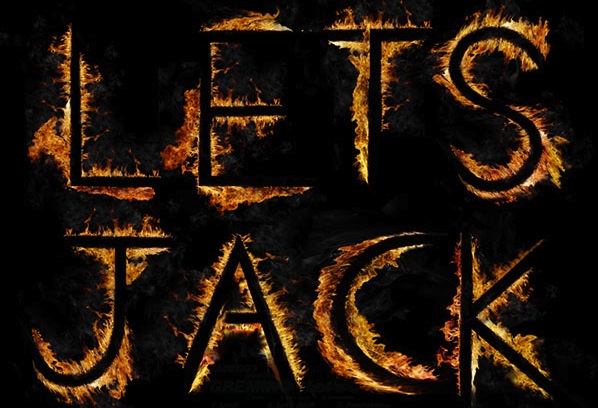
He’s been producing for over ten years and has made his mark on nearly every sub-genre imaginable, The Fader called him “post-regional”, and Fade to Mind and Keysound have each brought him into their respective folds. His name is Gremino (otherwise known as boi-a-gutz) and over the past few years, few artists have had the indelible effect that this Finnish producer has had on dance music’s myriad sounds. First garnering attention on a large scale in 2011 via a series of EPs on Car Crash Set, as well as a hotly tipped Jam City remix, Gremino was one of the early driving forces for the kaleidoscopic sound currently being pushed by Keysound, Her and Rinse’s label arm. Coalescing grime, garage, dubstep and techno, he has spoken about replacing the staid sounds of misnomer UK bass with an “edgier”, darkly intoxicating final product and that spirit has placed him firmly in the crosshairs of some of dance music’s most respected entities. In 2012, Fade to Mind released the Let’s Jack 12″, a Hadean take on grime and bassline with a focus on industrial rhythmic work and dancefloor shelling squarewaves. Let’s Jack is far from the first release one thinks of when Kingdom’s label comes up in conversation, but Gremino’s anxious compositions have set the stage for much of the imprint’s more recent output (e.g. Nguzunguzu’s Skycell, Dat Oven’s Icy Lake) and led to a placement on both the Keysound Allstars EP and the This Is How We Roll compilation.

Since 2012, Gremino has worked to diversify his bonds and has recently exploded into the fissure opened up between footwork and jungle, especially the TB-303 driven form, under the boi-a-gutz sobriquet. Favoring clipped rhythms and furious acid workouts, the experiment has seemed effortless and can be heard in this recent mix for Long Clothing. For our money though, Gremino’s wheelhouse is still squarely in the realm of 130 and for his Astral Plane mix, the mans came through with an erudite selection of dubstep classics, darker-than-dark house and ethereal tear out grime. The mix effectively functions as a follow up to this selection and is as much a genuflection to British ‘nuum culture as it is a genre-bending shred job. Gremino hasn’t had a proper release in several years, but expect new material in the not-so-distant future and indulge in the past and present of dance music history.

Read More

new

The dancefloor is rarely considered in terms of media consumption and more often than not is reduced to a linear relationship between physical location, deejay and patron. More often, critics call on religion, philosophy and sociology to try and explain the weekly mass exodus to clubs, warehouses and homes wherein people from all over the world sedulously drop everything in order to flail their extremities. One facet of the dance though, for better or worse, is that it is form of media consumption and represents many of the characteristics of contemporary mass media. Televised sports, print media and advertising are not the preferable modal counterparts to dance music, but the fact that it is, by-and-large, a commercial entity, mass produced and consumed by the  totality forces its consideration among the aforementioned mediums. That being said, contemporary club music, especially from the Atlantic seaboard, Chicago and Lisbon, deliberately challenges dance music’s position in the mass media sphere. From their minority position, Divoli S’vere, DJ Nigga Fox, Lotic and Total Freedom challenge the notion that club music is a top –> down form of capitalist media. From Newark to Berlin, producers and DJs have shown a willingness in recent years, in direct opposition to the consumerization of dance music in America, to subvert accepted societal structures of how music should be made, played and danced to.

Alongside the aforementioned artists, Berlin’s Jacques Gaspard Biberkopf has instilled an avant-garde approach to his club material, refusing to genuflect to the house and techno constitution the city he calls home insists upon. Instead, the Lithuania-born Biberkopf proposes a deconstructed club-verse built on sensuous human vocal manipulation and crashing industrial noise. In interviews, Biberkopf likes to reference autonomous sensory meridian response (ASMR), the visceral physical pleasure some encounter when exposed to certain noises, somatic and hypothetical space, and the affectations of the human voice. Biberkopf’s most recent mixes, for aqnb and Truants’ Functions of the Now series, are largely removed from the club space, instead floating in a deeply resonant realm denuded of treacle and extraneous elements.

When we asked Jacques to contribute to our mix series, the expectation was similar: something in the vein of Lotic’s “pissing people off” club mutations or his own odd ball Jersey-influenced productions. Instead, Biberkopf turned in a mix that directly challenges the manner that dance music is consumed and how analogous it is to sports highlight shows, another sensationalist form of mass media. NBA Top 10 highlights resound in the spaces between grime, Jersey club, kuduro and ballroom with disarming effect, both challenging and reinforcing club music’s inherent commercial value. With ASMR and the human voice in mind, the highlight snippets work on the pleasure nodes in our mind in a similar manner to dance music. It’s a deceptively provocative stance that challenges the conviction that the dancefloor is a sort of “outsider” space. Whether Biberkopf intended these political intonations or not, they are readily apparent in the mix and come to a fever pitch towards the end of the selection, a disarray of ballroom, highlight vocals and fragments of “Kiss Me Thru The Phone”. It’s the realization that mass media and mediated sub-culture are not entirely different worlds and actually intersect and flow back and forth more than is apparent on the surface. Discerning listeners are few and far between in 2014 and if the economic, political and social ramifications of our collective consumption habits aren’t shown in a proper light, then dance music will go the way of Sportscenter. No track list available so speculate as you will.

uras-reef

In Marshall McLuhan and Quentin Fiore’s essential The Medium Is The Massage: An Inventory of Effects, espouse that “our technology forces us to live mythically, but we continue to think fragmentarily, and on single, separate planes.” McLuhan and Fiore point to media’s ability to allow depth, but warn that modern technology’s inherent structures model our consumption habits. The words were published in 1967, but are startlingly prescient today and apply directly to both the means by which we consume and produce electronic music. A segment of dance music is aimed at metaphysical transcendence through body movement and while McLuhan would criticize the mass consumption methods of mega clubs and festivals, it’s undeniable that the dance has the ability to connect individuals through technology. In the late 1980s, Manchester group 808 State had a clear vision of dance floor transcendence and their revitalizing acid, house and trance forms acted as the manifestation of resistance against the technological constraints McLuhan so succinctly points out. The fact that the group took their name from one of dance music’s most prevalent machines only made their message more coherent.

Today, trance music has evolved into an unrecognizable monster that has captivated the clenched jaw masses via tactless largesse. Hailing from Cascais, Portugal, Ursa’s Reef is 2014’s answer to the conceptual enlightenment of 808 State, Robert Hood and Drexciya, melding aquatic language with deceptively robust four-on-the-floor rhythms. Major chords make up the floor of the music, while the cosmos and hallucinogenic transcendence find a home in the stupor-inducing filter sweeps and acid squelches. Fortunately for us, the Portuguese producer turned in the longest guest mix to date; nearly an hour and a half of brilliantly composed throwbacks and modern ventures that the fellows from 808 State would be proud of. Ursa’s Reef is still a small name today, but savoir faire trance has shown inklings of returning to popular music in recent years and he might just be on the cusp of collective brilliance.

Read More

filter-dread

The majority of producers attempting to recreate UK ‘nuum sounds either look to reinvent or recreate classics from a past era. Few though, have the acumen or the audacity to deconstruct, pick apart and piece back together the individual components of jungle, grime, two step, etc. It’s the quality that makes Rabit and Visionist so intriguing and it’s what is about to bring Birmingham-based producer Filter Dread to a far more widespread audience. Having already released on Lost Codes, Egyptian Avenue and UK Trends, it was announced earlier his week that his next EP will be released on Tom Kerridge’s RAMP Recordings, the venerable outlet that has been the home of Zomby, Flying Lotus, Mickey Pearce, SBTRKT and other contemporary titans. Inspired by “short sampling space, limited save functions and other restrictions,” the EP will be titled MIDI Space and will be released on June 23.

Filter Dread grew up attending raves in the fields surrounding his home town of Cambridge and has been fascinated with the eclectic fringes of soundystem culture ever since. Attending raves led to an interest in jungle and drum & bass and later an indulgent approach to recording software, specifically ways of analogue sounds sans hardware. We were lucky enough to grab Filter Dread for a guest mix at this frenzied time of year and the result is breakbeat-led, deconstructed madness. Ostensibly based in jungle, the mix almost entirely lacks propulsion, placing the listener in a disorienting, hallucinogenic world where heavily layered breakbeats are equally likely to dissolve into beatific xylophone melodies as they are a quivering squarewave synth. The dub-y qualities his cassette tape only Space Loops EP are readily apparent, but the mix, and the previews of his upcoming work, offer a more physical result than that floating, astronomical EP. Hit the jump to check out the full track list and be sure to grab MIDI Space on June 23.

Read More

shriekin

Dance music is best produced and consumed in a kaleidoscopic manner. When history, genre and setting (both physical and mental) are swished together and coagulated into a singular, protean entity is when the form really flourishes. The digital age of music production has made the above painfully obvious and while it has resulted in a relative amount of democratization, the ensuing dilution in quality is also readily apparent. Especially when it comes to reigniting dance music classics. The internet and popular radio shows has opened up young listeners to a myriad of classic sounds and genres, from the relatively recent like dubstep and grime to the early 1990s sounds of ‘ardkore and gabber. Producers have attempted ad nauseam to replicate the sounds of yore and have largely failed in those attempts. The explosion of breakbeat sounds over the past few years has been a welcome percussive blast, but the amount of derivative imitators greatly outnumbers the true-to-form believers.

Irish producer Jack Sheehan aka Shriekin’ (formerly Shriekin’ Specialist) walks the line between pastiche and authenticity with meticulous passion, clearly pointing to grime’s past while refuting its more staid practices. Sheehan’s sound is cleaner and more clairvoyant than what one might expect from an instrumental grime producer, but that’s exactly the quality that sets him apart from his forebears. It’s a bright, exuberant sound that matches the film noir bombast of Ruff Sqwad with the tightly coiled, trance-sampling hip hop production of American production duo the Block Beattaz and the Dipset Trance Party mixtape series. Ironclad snares form the backbone of most productions and are matched against a distinct R&B aesthetic and the ever-distinctive eski sound palette.

For his Astral Plane mix, Shriekin’ turned time on its head and drew a squiggling line from the freshest sounds of 2014 down through contemporary iterations of grime’s classics. Forthcoming Matt Wizard (on Gobstopper), Samename (on Pelican Fly) and a hotly tipped Shriekin’ joint (on Local Action), start the mix off with a wish wash of industiral Jersey and skittering R&B. Before long, recognizable strains of Flukes, XTC, Dizzee Rascal and the somewhat more recent Joy Orbison (Gage’s bootleg is not one to miss) enter the picture and the mix takes on a reverent, cerebral air. It’s the type of mix that makes a listener both wildly nostalgic and ravenously excited for what the future has in store. And while there might be a mass of misguided revivalists, as long as we have artists like Shriekin’ in our mist, we’re in a good place.

Read More

dark0

In a general sense, grime is generally not thought of as party music, especially the melody-focused brand championed by Rabit and Visionist in recent years. It’s not necessarily after-club music in the night bus variety either despite the fact that it elucidates a neo-futuristic urban landscape better than just about any other form of electronic music. That doesn’t mean it can’t function in either of those settings though. Northwest London’s Dark0 proves that squarewave-based instrumental grime can soundtrack a night out with aplomb. It just might be a night where you got entirely too faded. With an ear for early grime producers like Davinchi and Maniac, Dark0 has a keen ear for the canon’s classics, but that’s the point where he stops looking back.

Last year’s Zero mixtape saw him matching classic acapellas with his brightly melodic, synth-focused productions, showings his ability to adapt the old and the new with a refined hip hop aesthetic. 2013 also saw the release of the I Ain’t A Sweet Boy EP, a more concerted effort that added blistering percussion to his shimmering melodic prowess. Last week, the adeptly titled Sin EP hit the streets, Dark0’s biggest release to date, disseminated by the aforementioned Visionist’s Lost Codes imprint. Sin is a large record in more than just its scope, adding a rough hewn amphetamine edge to his already efined template  To celebrate the release, he laced us with a 30 minute mix detailing in blurry cognizance a night out, matching distinctive grime instrumentals with some of the funnest rap tunes to come out in recent years. It’s a fragmented 30 minute journey through Juicy J chant-alongs at the club, bleary-eyed public transpo rides and the eventual attempt to piece together the events of the previous night. In this context, Dark0’s take on melodic grime makes the connection between the before, during and after of the club experience and while the individual components might come off as incomprehensible, the whole makes perfect sense.

Read More

legion

One of the most pervasive criticisms of American club music is that it lacks a level of maturity. American grime and dubstep producers don’t respect the history of their respective genres. Ballroom and footwork are functional sounds produced to assist a dance and nothing more. Jersey club is a bed squeak sample and nothing else. We call bullshit. These criticisms have been rampant since Uncle Luke and Miami bass were demonized and, unfortunately, there will also be a semblance of racial rhetoric in these discussions. Former member of Westside Schmucks and current Atlanta resident Jay Murphy knows a thing or two about club music in America and has quietly positioned himself at a major axis point of a number of scenes and sounds.

These days, Murphy goes by Legion and reps crews like Brick Bandits, Tomahawk Chop and Freshmore. In the past, Murphy has dealt mainly in the mid-Atlantic sounds of ballroom, Jersey and Bmore, but under his Legion pseudonym, he has refined his sound is a gritty amalgam of both British and American sounds. As far as DJing goes, you would be hard pressed to find someone more voracious for dubs, exclusives and wonky bootlegs, resulting in a fun, unexpected result in all of his mix work. Legion’s Astral Plane mix touches on why American club music has to be taken seriously without coming off as presumptuous, marauding through 23 tracks from members of his own crews, as well as AP favorites like Grovestreet, DJ Milktray and Inkke. The mix is breakneck and angular, settling into an aggressive modus operandi early on and never letting up. Stream/download below and hit the jump for the full track list.

Read More

divoli-svere

In the words of Goddollars, co-founder of Los Angeles polysexual disco A Club Called Rhonda, “we’re currently experiencing a total mainstreaming of dance music in America.” Fewer and fewer LGBT and minority stakeholders control clubs and record labels, while the festival circuit has effectively sublimated dance music’s distinctly black, gay heritage into something more palatable for the $2000 Coachella ticket buying masses. Immerse yourself in Divoli S’vere‘s music for a few minutes though and you’d be hard-pressed to agree with the above statement. Raised in New York and presently residing in Atlanta, the dancer, producer, DJ, vocalist and graphic designer has become one of the mostly hotly tipped artists in the New York-centric ballroom/vogue realm, although he would attest that he’s “not in the scene.” And while Divoli did come up as a dancer, his production acumen has more in common with Brick Bandit originals Tim Dolla and DJ Tameil than the slower, more linear form of music oft-played at balls (for a quick rundown of contemporary ballroom lingo and history, see here).

Divoli grew up in the mixtape rap and dubstep era of American music after all and it’s readily apparent in his music and DJing, which is often comprised of manic quick chops and an un-compromising ferocity. Ckuntinomksz”, now four volumes deep, is Divoli’s free mixtape series and sounds like the meeting of DJ Mustard, late-1990s Dance Mania and a mutant extrapolation of Masters at Work. The mixes have a strong pop sensibility and often include contemporary rap and R&B, but Divoli’s slinky, licentious vocal work generally dominates both his single and mixtape work. His laugh, often utilized as a producer tag, has become ubiquitous in Fade 2 Mind mixes over the past few years and Divoli has become one of the most sought after vocalists in the greater ballroom world. MikeQ, the F2M representative and ballroom ambassador, certainly noticed and snapped Divoli up for his Qween Beat imprint and the two collaborate often.

With the “mainstreaming” (read: whitening) of America’s dance culture in mind, Divoli S’vere and Qween Beat rise above the bullshit, not only because of their superior musical aesthetic, but because of the all-inclusive, collaborative, open-source and DIY ethos they bring into what they do. The production, vocals, visual design and dissemination are all doen in-house and all done right. You don’t need to be able to afford bottle service to enjoy, produce or play out ballroom, but you do need to understand its roots and respect its musical and dance form. Without further ado, Divoli ran through 26 manic tracks in just over half an hour in his Astral Plane mix. You’ll hear plenty of the holy trinity, Beyonce, Britney and Rihanna, as well as unreleased bits from various Qween Beats artists. After all, anyone can enjoy ballroom music, but don’t expect your duck walk to be described as ckunt unless you really bring it.

Side note: the art work was devised as a collaboration between our team and Divoli : )

Read More

gundam

Over the past few years, it’s become apparent that Soundcloud has become the dominant form of sharing and funding unreleased dubs and radio rips. While Youtube still holds a place in the collective consciousness and radio stations like Rinse, NTS and Berlin Community Radio continue to shine, Soundcloud is the real digger’s paradise these days. It doesn’t rile the imagination like pirate radio or offer physical substance like acetate, but Soundcloud does at least offer a relatively comprehensive database for unreleased material, often uploaded only minutes after being rinsed on an online radio station like Sub.FM, RWD FM or Nasty FM. Essex resident Gundam, a member of the RawSense collective, has taken a special liking to the Soundcloud platform, uploading numerous radio rips, reposting whole shows that feature his music and regularly offering free beat tapes and remixes to his fans.

As far as aesthetics go, Gundam fits into a cadre of modern classicists that includes JT The Goon, Major Grave and others, taking what was so effective about grime’s early years and giving them a contemporary update. That being said, he also dabbles in hip hop production and clearly has a keen interest in breakbeat-led forms and the percussion-heavy machinations of producers like Neana and Akito. He’s remixed pop stars Drake and Beyonce to great effect (trust me) and also accumulated nods from Flowdan, Slackk and Son Raw. His nom de guerre elicits images of larger-than-life robots and his music is equally massive, both mechanical and fluid, a far from linear course leading from grime’s past and into its future. Gundam’s Astral Plane mix exemplifies this ethos, picking and choosing key elements from the formative era (in the form of Blackwax’s “Pulse X” remix) and contiguously mixing them with hyped, but untested new tracks (William Skeng’s “Symbiotic Wetsuit Riddim”). If you’re looking for a comprehensive account of where grime has been, is and will be, then look no further.

Read More

imaabsLast week, we brought you Imaabs and Tomas Urquieta’s Jam City Reworks project, a two track effort that sees the two Chilean producers take on signature tracks from the Night Slugs representative. The tracks fall somewhere in the nether region where ballroom, Jersey club and grime meet, distinguished by their raw sonics and non-linear rhythmic patterns. These characteristics put Imaabs and Urquieta in the same realm as the Her Records folk and Gang Fatale crew, despite living thousands of miles from the sound’s epicenter on America’s East Coast and London. It’s easy to get caught up in the fantastical idea that producers from outside of the Anglo/Euro world belong in an entirely different category than those who reside within Europe/America/Australia, but this stratification is rarely useful and often results in a regressive, bifurcated classification system. The fact that Imaabs and Urquieta are from Chile should be noted, but it shouldn’t define the artists involved.

That being said, artists who reside outside of dance music’s core can and do offer a different perspective on both production and consumption methods. After hearing Imaabs ingest and rearrange ballroom on his Baroque EP and various one-offs, we asked him to contribute to our guest mix series and he came up with the brilliant idea of highlighting the work of South American and Mexican producers. The following hour and ten minute mix both draws parallels and points out the contrasts between the work of Santiago’s Alpha Stronggah, Urquieta and others along with Astral Plane favorites Rushmore, Neana and Piri Piri. It’s both seamless and discombobulated; an impossibly smooth production that still manages to knock this listener off his feet with every subsequent listen. There are hints of kuduro, zouk and other Caribbean/West African styles, but the majority of the mix falls into the aforementioned ballroom/club/grime amalgam. Moving past geography, Imaabs points out a number of wildly talented producers (Paul Marmota, Inti Kunza) and previews a few special new collaborations. Track list after the jump.


Read More